Bluewater Productions
The 2026 Slate

Slate Overview
| Category | The Last Tenant | The Fixer |
|---|---|---|
| Genre | Psychological Horror | Dramatic Thriller |
| Location | Single apartment — Edmonton | Alberta · Colombia · Costa Rica |
| Protagonist | Woman, 29, escaping danger | Man, 81, directing from distance |
| Antagonist | Two controlling men | Criminal kidnapping network |
| Theme | Being believed, survival | Experience, restraint, still ready |
| Budget Range | $175K–$200K CAD | To be determined |
| Status | Production development | Treatment locked, script next |
| Casting Vision | Strong female lead | Sam Elliott |
| Copyright | Canada, WGA (US pending) | Canada, WGA, US — all registered |
The Last Tenant
Psychological Horror · Single Location · Edmonton, Alberta
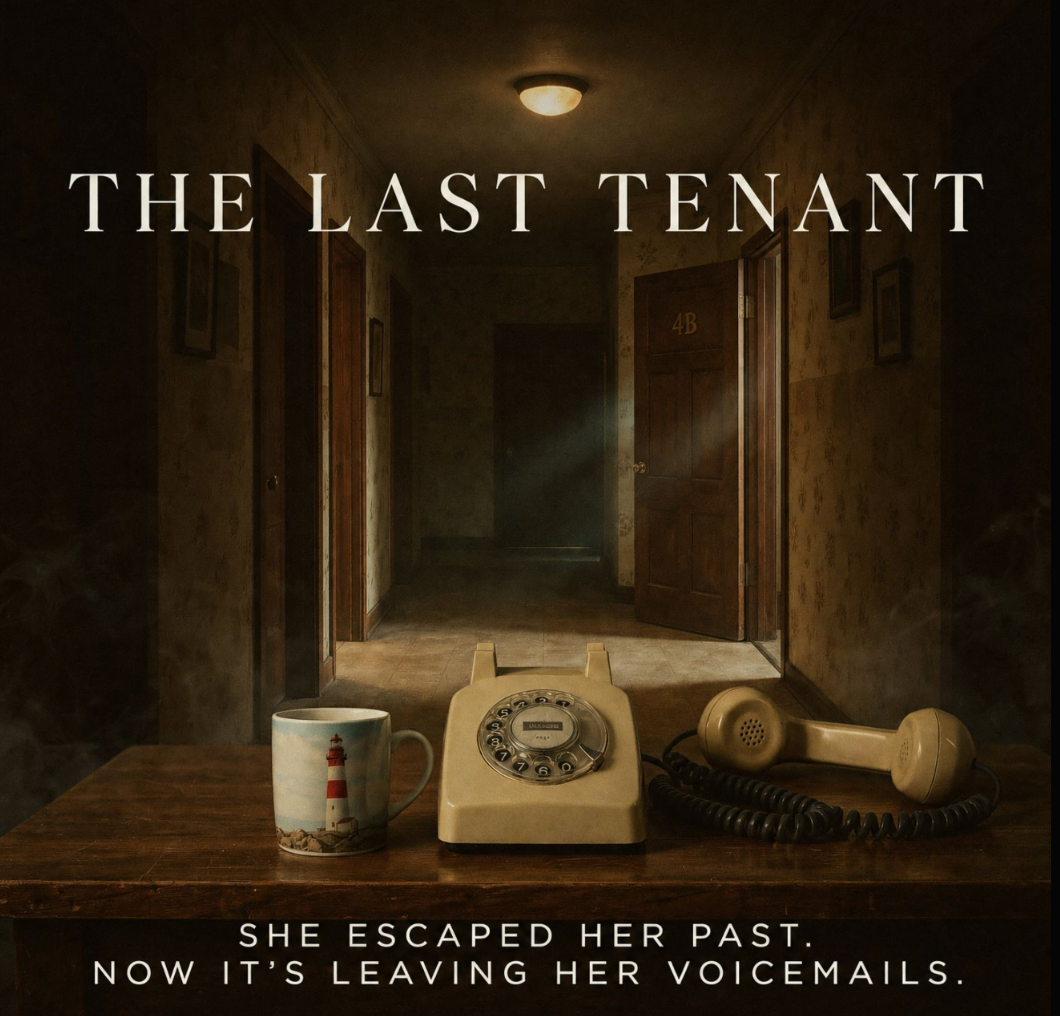
Mara Cole, 29, escapes a controlling relationship and slips into apartment 4B—cheap, anonymous. There she finds voicemails from her own number: Claire Nowak, the previous tenant who died there six months earlier. The messages escalate—casual to confessional to urgent—eighteen months of abuse, compressed. As Detective Reyes reopens the case and Mara’s ex resurfaces, the two stories converge. Beneath the bathroom floor: a tin box—journal, photos, recordings—what police missed. Mara finds it. The case turns. Danger accelerates. Morning: two mugs on a kitchen table. Mara still here. That is enough.
Mara Cole
Escaped a controlling relationship with one bag. 4B is a fresh start—until the voicemails.
Claire Nowak
Dead six months. Voicemails escalate—casual to confessional to urgent—18 months of abuse, compressed.
The Box
Under the bathroom floor: a box—journal, photos, recordings. Mara finds it; the case turns; danger escalates.
Why The Last Tenant
Social Resonance
Domestic violence, coercive control, institutional failure—told through story, not statement.
Sound as Horror
Sound is key. The voicemails, the silence, the knock at the door—built entirely on what you hear.
Comparable Performance
The Invisible Man (2020)—$143M worldwide on a $7M budget with an identical social horror premise.
Festival Programmable
Sundance, SXSW, Tribeca, Fantasia—grounded, socially conscious horror with a strong female lead.
Up to $200K CAD—qualifies for Telefilm micro budget program
Estimated via CPTC and Alberta Film Tax Credit
15–20 days, 90% in one apartment and hallway
Production Status
The Fixer
Working Title: Still Ready · Dramatic Thriller · Alberta / Colombia / Costa Rica
A man lives quietly in Alberta. Once he navigated complex, high-risk negotiations across South America; age has narrowed his reach, not his discipline, judgment, or credibility. When word from Colombia brings a kidnapping, his name surfaces on reputation—trusted to close deals without violence or chaos. He won’t travel: from his kitchen table he directs traffic, reopening old channels in Colombia and Costa Rica with neutral figures who move leverage without attention. His Colombian housekeeper’s practical questions and cultural insight sharpen his focus.
Kitchen Table Command
From his kitchen table in Alberta, he reconnects old channels and directs traffic.
Old Channels
Intermediaries in Colombia, contacts in Costa Rica.
Leverage, Not Payment
Identifies funds already in circulation; uses controlled release as leverage—not payment.
The Transaction Closes
“She’s home.” The transaction closes because there is nothing left to exploit.
Why The Fixer?
The Anti-Action Movie
No car chases, no weapons, no spectacle. A man at a kitchen table doing the most important work of his life—more gripping than anything CGI could manufacture.
An Unprecedented Protagonist
An 81-year-old at the absolute peak of his powers—intelligence, experience, and nerve in a body that doesn’t run anymore. Audiences have never seen this.
Awards Potential
A role of this depth for an actor of this age is the kind of material that defines careers. Casting vision: Sam Elliott. The voice, the stillness, the absolute authority.
Comparable Films
Locke (Tom Hardy), Margin Call, The Call—contained tension without spectacle. A proven audience for intelligent, character-driven thrillers.
Production Status
Production Locations
The Fixer is a three-country production achieved on a micro budget through disciplined planning. The contrast between these three worlds is not just logistical—it is the visual language of the film itself.
Alberta, Canada
The kitchen table. The phone. The housekeeper. Edmonton provides full production infrastructure, AMF and tax credit eligibility, and the visual contrast of Canadian winter calm. Primary shoot: 15–18 days.
Colombia
A few carefully chosen shots establish the human reality behind the negotiation—streets, homes, waiting. Colombia is shown as a place where real people live. A local Colombian fixer manages permits and logistics.
Costa Rica
The place where intermediaries meet and information changes hands. Visually distinct from both Alberta and Colombia—its neutrality is not just political but aesthetic. Estimated international cost: $15,000–$25,000 CAD.
The Bluewater Signature
Both films share a thematic DNA: quiet power, credibility, and refusing to be finished. Restraint over spectacle. Bluewater Productions makes films about people who refuse to be counted out.
The Last Tenant
Entirely contained. One apartment. One woman still standing. The quiet power of survival and being believed.
The Fixer
Global reach. Kitchen table command. He is still ready.
The Bluewater Productions Vision
These are not two unrelated projects. They are two expressions of the same filmmaking philosophy—the conviction that a contained space, a deeply drawn character, and a story with something real to say will always outperform spectacle.
Set in Alberta
Both films rooted in Alberta—built for micro to low budget production using emerging local talent.
Festival Ready
Social and emotional depth that makes a film programmable at serious festivals and memorable to audiences.
Lived Experience
Stories that come from lived experience rather than genre formula—quiet authority that cannot be manufactured.
The Team

Bert Nielsen
Bert Nielsen was raised on a farm in Alberta, the last of six children in a family that was, as he puts it, poor in money but rich in everything else. He is the only one of those six still here. He trained saddle horses as a young man, went to the movies whenever he could, and quietly carried the dream of telling stories for most of his life.
He spent thirty years as a professional pipeline welder before transitioning to pipeline consulting and inspection—a career that took him across Canada, into Russia, and deep into the culture and landscape of Colombia, where he lived and worked for extended periods and where he was married for ten years to a Colombian woman. They remain close friends to this day.
It was that life—the negotiations, the relationships, the understanding of how things move quietly between people in difficult circumstances—that eventually became the foundation of The Fixer. The story is not autobiographical, but the authority behind it is. Nielsen knows what it feels like to be the person in the room that everyone trusts to make something difficult happen without violence or chaos. He simply moved that man to a kitchen table in Alberta and let him work.
The Last Tenant came from a different place—from years of listening, of understanding what it costs to be quiet when you should speak, and what it means when someone finally does. It is the film of a writer who pays attention to people.
Nielsen came to screenwriting without formal training and without apology. Both projects in the Bluewater Productions slate are registered with the Canadian Intellectual Property Office, the Writers Guild of America, and the US Copyright Office. He built a production company, found a director, developed a two film slate, and designed a funding and talent strategy—all because he had stories worth telling and refused to wait for permission to tell them.
In the same month that Bluewater Productions launches its development slate, Nielsen is also presenting a Beyond Compliance Methodology concept to the Canadian Government and top tier pipeline firms—a framework designed to move the industry beyond minimum standards toward something genuinely better. It is, in its way, exactly what he is doing with film.
He has never done the minimum. He is not about to start.

Len Rosen
Len Rosen is an award-winning Canadian filmmaker with a background spanning music video direction and narrative storytelling. His approach is rooted in classical cinema—visual precision, acoustic tension, and deeply grounded performance.
Formally attached to both projects as Director and Executive Producer, Rosen brings the tradition of Hitchcock and Kubrick: sustained dread built through composition, silence, and slow revelation. He brings not only directorial vision but producer instinct—a rare combination that makes him an active creative partner in development and financing.
Martin Kenny
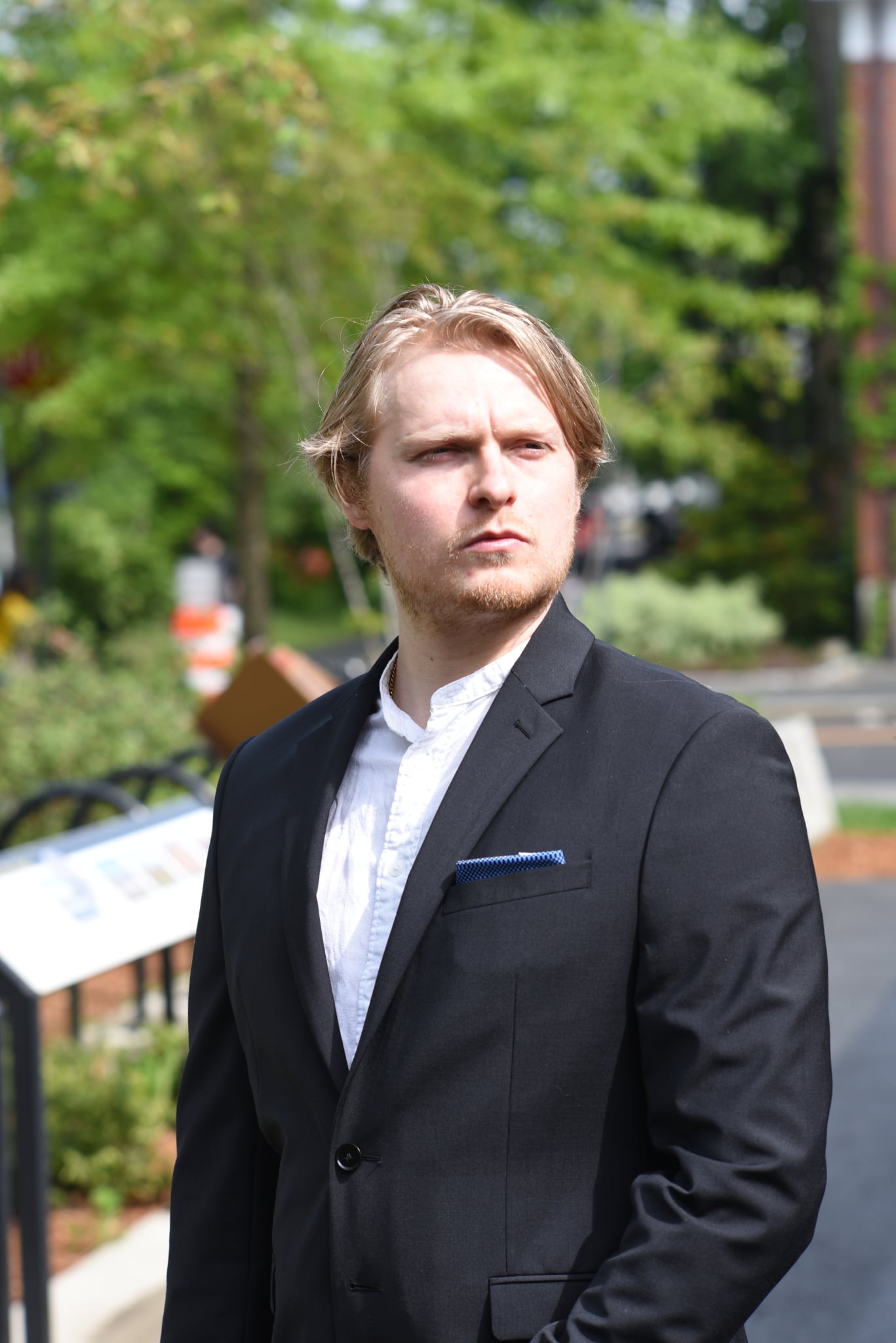
Martin Kenny supports the Bluewater Productions slate on production coordination, partnerships, and outreach to funders and academic institutions. His background spans founding a digital marketing agency, high-ticket B2B sales, and online education, where his courses have reached more than 65,000 students worldwide. He is also co-creator of The Hollow Ladder, an economics podcast and book.
Kenny has lived and worked in Buenos Aires and Bogotá and traveled extensively through Southeast Asia, giving him firsthand familiarity with the people, logistics, and rhythms of the Latin American settings at the heart of The Fixer. That combination of on-the-ground international experience and relationship-driven work is what he brings to the table: building the bridges between Alberta, Colombia, and Costa Rica that turn a three-country production plan into a working reality.